
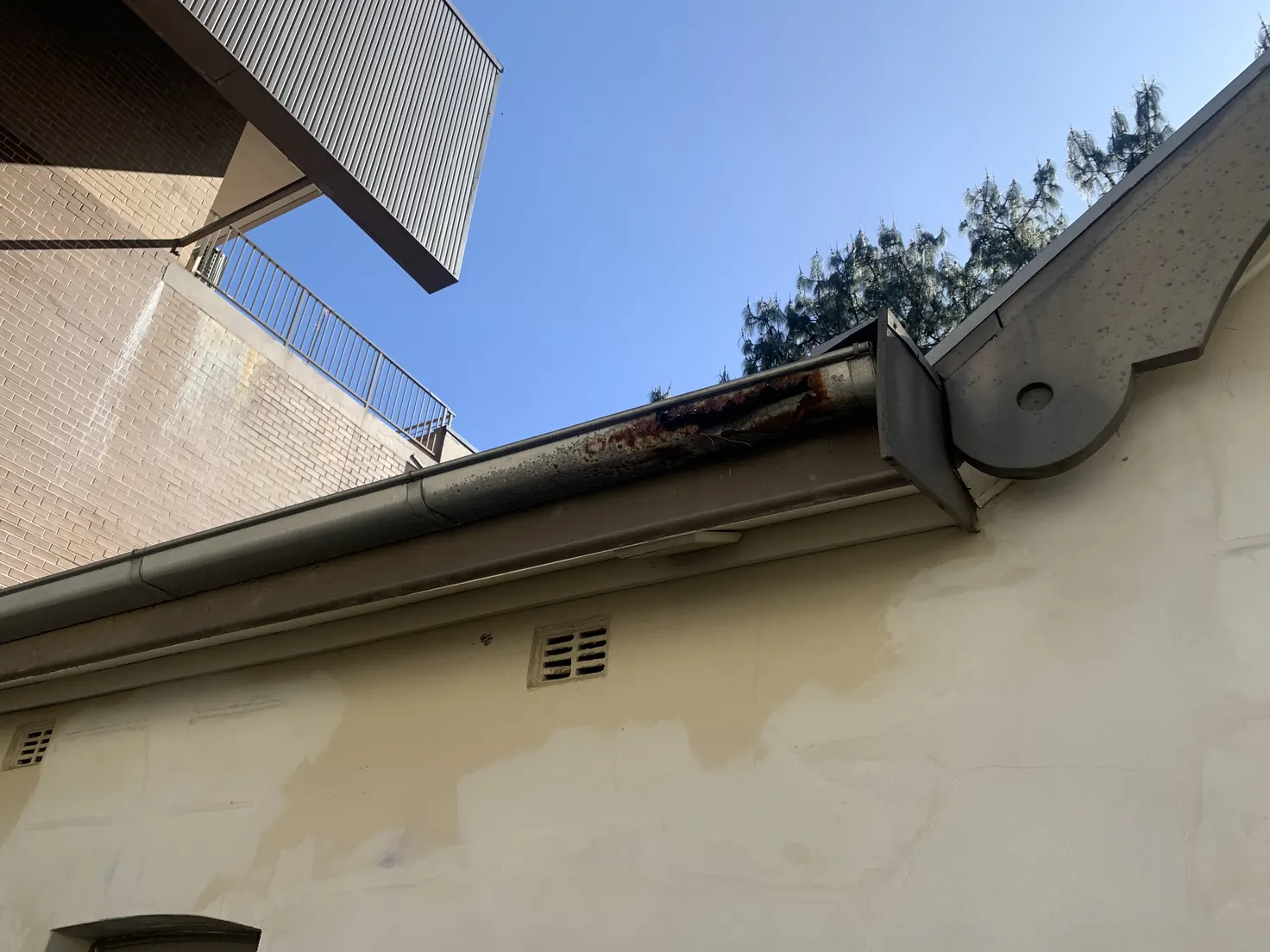
Guttering Inspection Checklist: What Every Western Sydney Homeowner Should Know
By Elyas Bingley, The Leak Detective · Bingley Trade Services
Guttering is the most overlooked component of any roof system in Western Sydney.
Homeowners spend time worrying about cracked tiles and leaking skylights — and rightly so — but it's often the gutters that quietly cause the most damage. A blocked downpipe during a summer storm can send hundreds of litres of water directly behind the fascia board, into the wall cavity, and under the eaves in a matter of minutes. By the time the damage shows up on the inside, it's already expensive.
Western Sydney's climate makes this worse than most. Long dry summers fill gutters with leaf litter, dust, and debris. Then the storm season arrives — often suddenly and intensely — and overloaded gutters simply can't cope.
This checklist is designed to help Western Sydney homeowners understand what to look for, what it means, and when a problem is beyond a DIY clean and needs a professional assessment.
Why Guttering Matters More in Western Sydney
Western Sydney sits in a rain shadow for much of the year, but when it rains, it often rains hard. The region regularly records intense short-duration rainfall events — the type that dumps 40–60mm in under an hour. Standard residential guttering, if undersized or partially blocked, simply cannot handle that volume.
Compounding this, Western Sydney is one of the most heavily treed suburban regions in NSW. Suburbs like Castle Hill, Baulkham Hills, Glenhaven, Pennant Hills, and parts of Parramatta have mature eucalyptus, gum, and deciduous street trees that shed continuously — leaves, bark, seed pods, and small branches accumulate in gutters year-round.
The result is a guttering system that is under constant stress — and one that most homeowners inspect, at best, once a year.
The Bingley Guttering Inspection Checklist
Work through this checklist from the ground where possible. Never climb onto the roof without appropriate safety equipment and training — if you cannot safely access the area, this is a job for a professional.
✅ 1. Check for Visible Sagging or Pulling Away From the Fascia
Walk the perimeter of your home and look along the gutterline from each corner. Gutters should run in a straight, consistent line with a slight fall toward each downpipe.
What to look for:
- Sections that visibly sag between brackets
- Gaps where the gutter has pulled away from the fascia board
- Sections that appear lower at one end — indicating bracket failure or fascia rot
What it means: Sagging gutters pool water rather than draining it. A gutter that has pulled away from the fascia is allowing water to run directly behind it — often into the wall cavity or sub-floor.
Urgency: High — arrange repair before the next significant rain event.
✅ 2. Inspect All Gutter Joints and End Caps
Guttering systems are assembled in sections joined with sealed connectors. Over time — particularly on homes more than 15 years old — these joints dry out, crack, and fail.
What to look for:
- Rust staining or water marks on the fascia directly below a joint
- Paint discolouration or bubbling on the fascia board at joint locations
- Visible gaps or separation at joins when inspected up close
What it means: A failed joint is a direct water entry point. Water tracking behind a joint will saturate the fascia board, promote rot, and eventually work its way into the wall cavity or eave lining.
Urgency: Medium to high depending on location.
✅ 3. Check Downpipes for Blockages and Damage
Downpipes are the exit point for everything your gutters collect. A single blocked downpipe can back up water across an entire gutter run during a heavy rain event.
What to look for:
- Debris visible at the top of the downpipe entry point
- Slow drainage or standing water in the gutter after rain
- Rust, crushing, or physical damage to the downpipe body
- Erosion or pooling at the base of downpipes
- Downpipes connecting underground — check the surface outlet for blockages and root intrusion
What it means: A blocked downpipe during a heavy Western Sydney storm will cause the entire gutter run to overflow within minutes.
Urgency: High — clear before storm season (October).
✅ 4. Look for Rust, Corrosion, and Holes
Steel guttering — common on Western Sydney homes built before the mid-1990s — has a finite service life. Prolonged exposure to leaf tannins, pooled water, and UV degradation causes rust to develop from the inside out.
What to look for:
- Orange-brown rust staining on the inside of gutters
- Pitting or perforation on the gutter floor — holes as small as 5mm will drip continuously
- Rust staining running down external walls or fascia boards from the gutter base
- Soft or flaking sections when tapped — a sign the steel has corroded through
What it means: A rusted-through gutter cannot be patched effectively for the long term. Once rust perforations develop across multiple sections, full gutter replacement is the appropriate solution.
Urgency: Medium — plan for replacement within 12 months. High if above wall cavities or timber fascia.
✅ 5. Assess Gutter Sizing for Your Roof Catchment
This is the check most homeowners never think to make — and one of the most common issues we identify on estate-style homes across Kellyville, Stanhope Gardens, and Glenmore Park.
Under AS/NZS 3500.3 (Stormwater Drainage), guttering and downpipes must be sized to handle the peak rainfall intensity for the property's location and roof catchment area. In Western Sydney, where short-duration intense rainfall events are common, many homes were fitted with guttering that is technically undersized for the roof area it serves.
What to look for:
- Gutters that overflow at the midpoint of a run during moderate rain
- A large roof catchment draining into a single 90mm downpipe
- 75mm quad profile gutters on a roof catchment greater than 40 square metres
What it means: Undersized guttering is a design issue — it can't be solved by cleaning alone. The fix involves upsizing the gutter profile or adding additional downpipes.
Urgency: Medium — prioritise assessment before storm season if overflow has been observed.
✅ 6. Inspect the Fascia Boards Behind the Guttering
The fascia board is the timber or PVC board that guttering is fixed to. Because it sits directly behind the gutter, damage is rarely visible without removing or lowering the gutter itself.
What to look for:
- Paint discolouration, bubbling, or peeling on the fascia face below gutter joints
- Soft spots when the fascia is pressed firmly — a sign of rot in timber fascia
- Visible gaps between the fascia and the rafter tails above
- Fascia boards that appear bowed, warped, or pulling away from the structure
What it means: A rotted fascia board cannot hold guttering securely, and represents a direct pathway for water and vermin into the roof cavity through the eave line.
Urgency: High where rot is confirmed — structural integrity of the gutter fixing is compromised.
✅ 7. Check Leaf Guard or Gutter Mesh Condition
Many Western Sydney homes — particularly in leafy suburbs like Castle Hill, Baulkham Hills, and Pennant Hills — have had leaf guard or gutter mesh installed. While this reduces cleaning frequency, it introduces its own maintenance considerations.
What to look for:
- Mesh that has lifted, torn, or separated from the gutter
- Fine debris, seed pods, or lichen accumulating on top of the mesh
- Mesh pushed down into the gutter by debris weight — restricting flow
- Rust or corrosion on older steel mesh products
What it means: Damaged or overloaded leaf guard can actually worsen gutter performance by restricting water entry during heavy rain.
Urgency: Low to medium — schedule annual inspection and clear as part of routine maintenance.
When to Stop DIYing and Call a Professional
This checklist covers what you can assess safely from the ground or a stable ladder at single-storey height. There are situations where a professional inspection is not optional:
- Two-storey properties — safe roof and gutter access requires appropriate equipment and fall protection under the NSW Work Health and Safety Act
- Suspected fascia rot — assessing the extent of rot requires guttering to be removed
- Undersized guttering — correctly sizing a replacement system requires calculating roof catchment area, rainfall intensity, and flow rates in accordance with AS/NZS 3500.3
- Post-storm assessment — after a significant hail or wind event, a written inspection report strengthens your insurance claim
- Underground stormwater connections — blockages and root intrusion require specialist assessment
At Bingley Trade Services, guttering condition is assessed as part of every roof inspection we conduct across Western Sydney.
Guttering Maintenance Calendar for Western Sydney Homeowners
| Time of Year | Task |
|---|---|
| August – September | Full gutter clean before storm season. Check all joints, downpipes, and mesh. |
| October – November | Post-storm checks after any significant event. Clear debris from downpipe entry points. |
| February – March | End-of-storm-season inspection. Identify any storm damage before autumn leaf fall. |
| April – May | Clear autumn leaf fall from gutters and downpipes. Check fascia condition. |
| June – July | Winter inspection — check for sagging under debris weight and joint integrity. |
Guttering Overdue for a Professional Assessment?
We assess guttering condition as part of every roof inspection across Western Sydney — Parramatta, Blacktown, the Hills District, Penrith, and all surrounding suburbs.