
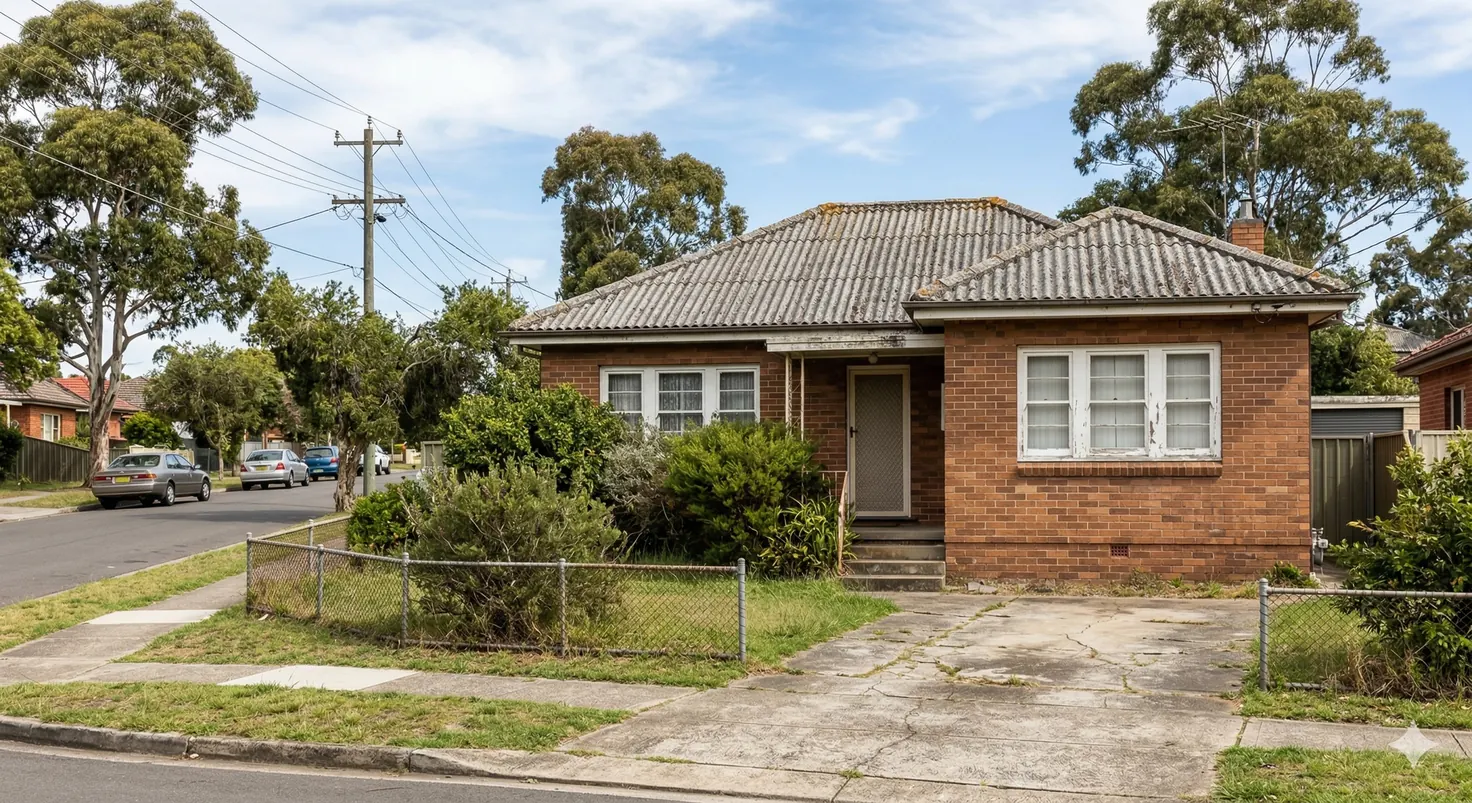
Asbestos Roof Inspection Western Sydney: What Homeowners Need to Know Before They Touch a Thing
By Elyas Bingley, The Leak Detective · Bingley Trade Services
If your Western Sydney home was built before 1990, there is a real possibility that asbestos-containing materials are present somewhere in the building — and the roof is one of the most common locations.
Asbestos cement sheeting — known colloquially in Australia as fibro — was one of the most widely used building materials in residential construction from the 1940s through to the mid-1980s. Roofing products including corrugated asbestos cement sheeting and the distinctive "Super Six" profile were standard across Blacktown, Parramatta, Penrith, Merrylands, Auburn, and surrounding suburbs during Western Sydney's major residential expansion periods.
The challenge for homeowners today is knowing what they have, what condition it's in, and — critically — what they can and cannot do about it without putting themselves, their family, and their neighbours at serious risk.
Asbestos in Australian Homes — The Basics
Asbestos was used extensively in Australian building products for most of the twentieth century. In roofing applications, the most common products were:
Corrugated asbestos cement sheeting — flat or corrugated sheets used on roofs, garages, carports, and outbuildings across Western Sydney. Visually similar to corrugated Colorbond or fibreglass sheeting but distinctly heavier and more brittle with age.
Super Six roofing — a large-profile corrugated asbestos cement sheet commonly used on houses, sheds, and industrial buildings from the 1950s through to the 1980s. Named for its six large corrugations, it remains common on older homes and outbuildings throughout Western Sydney.
Ridge capping and accessories — asbestos cement was also used for ridge cappings, hip cappings, and associated roofing accessories on fibro homes of this era.
Asbestos was banned from use in all new building materials in Australia on 31 December 2003. However, materials installed before this date remain in place across hundreds of thousands of properties throughout Western Sydney.
Is Asbestos Roofing Dangerous?
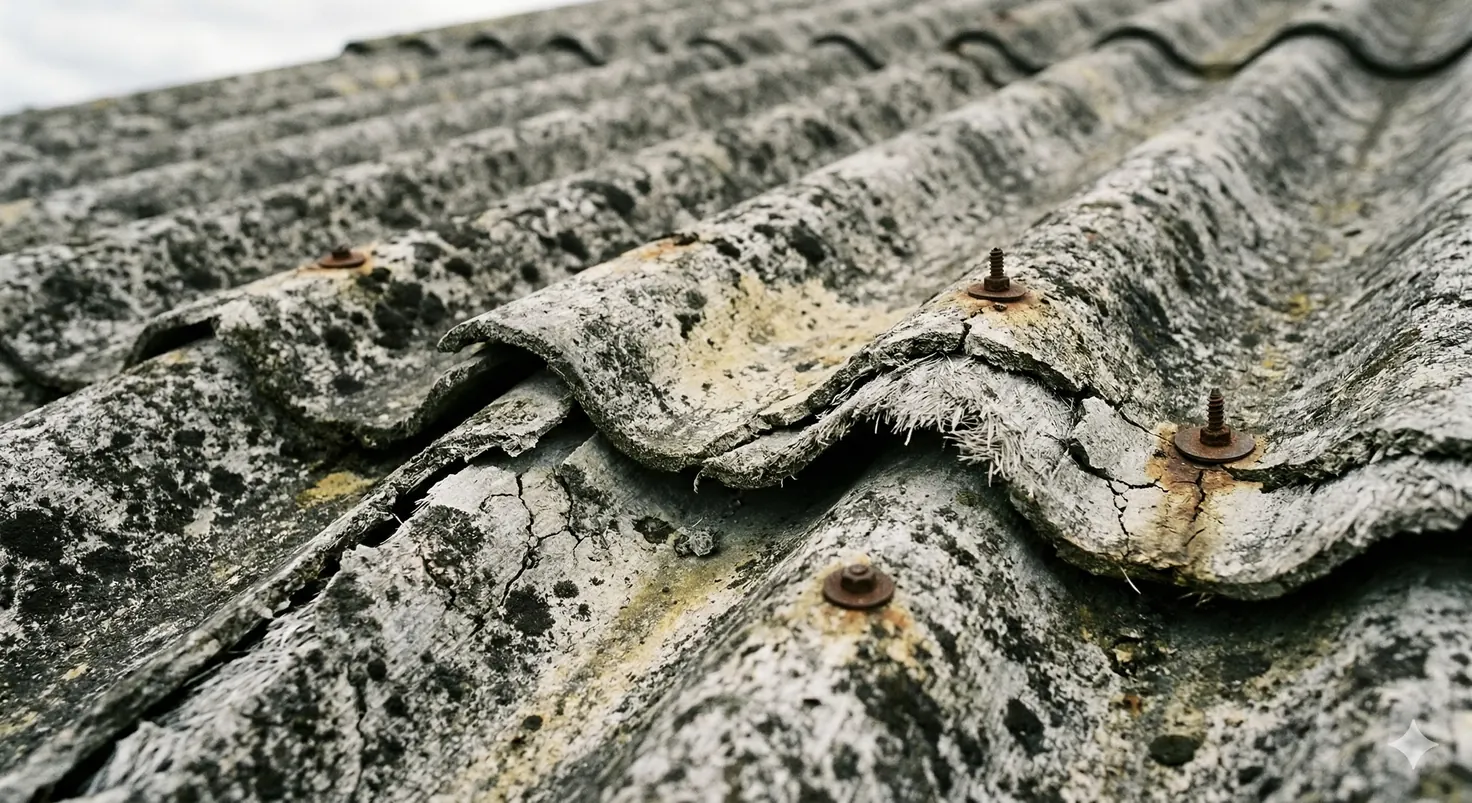
The answer depends on the condition of the material and whether it is friable or non-friable.
Non-friable asbestos (also called bonded asbestos) is asbestos that is bound within a solid matrix — such as asbestos cement sheeting. When it is intact and in good condition, the asbestos fibres are locked within the cement matrix and do not readily become airborne. Intact, well-maintained non-friable asbestos roofing does not pose an immediate health risk simply by existing.
Friable asbestos is asbestos-containing material that can be crumbled, pulverised, or reduced to powder by hand pressure. Asbestos cement roofing that has severely weathered, is crumbling at the edges, has been drilled or cut, or has been damaged by hail or impact may be approaching friable condition.
The critical health risk with asbestos — mesothelioma, lung cancer, and asbestosis — arises from inhalation of airborne asbestos fibres. Fibres are invisible to the naked eye and have no smell. Once inhaled, they cannot be expelled from the lungs.
This is why the condition of asbestos cement roofing matters enormously — and why a professional assessment is essential before any work is carried out near it.
How to Tell if Your Western Sydney Roof Contains Asbestos
Most homeowners in Western Sydney cannot visually confirm whether their roof contains asbestos with certainty — and neither should they try to find out by touching, drilling, or disturbing the material. However, there are strong indicators that asbestos roofing may be present:
- Your home was built before 1990 — and particularly before 1985. The earlier the construction, the higher the likelihood of asbestos-containing roofing materials.
- The roof has a corrugated sheet profile — older corrugated sheet roofing that is not clearly Colorbond steel or fibreglass is likely to be asbestos cement.
- The roof has a Super Six profile — the distinctive large-corrugation Super Six profile is almost exclusively asbestos cement on properties built before 1985.
- The property has other known fibro elements — if the home has fibro wall sheeting, fibro eave linings, or fibro outbuildings, there is a strong likelihood the roofing materials are also asbestos cement.
- The ridge capping appears to be cement — flat cement ridge cappings on corrugated sheet roofs are frequently asbestos cement.
If any of these indicators are present, treat the roof as asbestos-containing until a professional assessment confirms otherwise. Do not drill, cut, sand, scrub, or pressure wash the roof surface under any circumstances before that confirmation.
What Western Sydney Homeowners Cannot Do Themselves
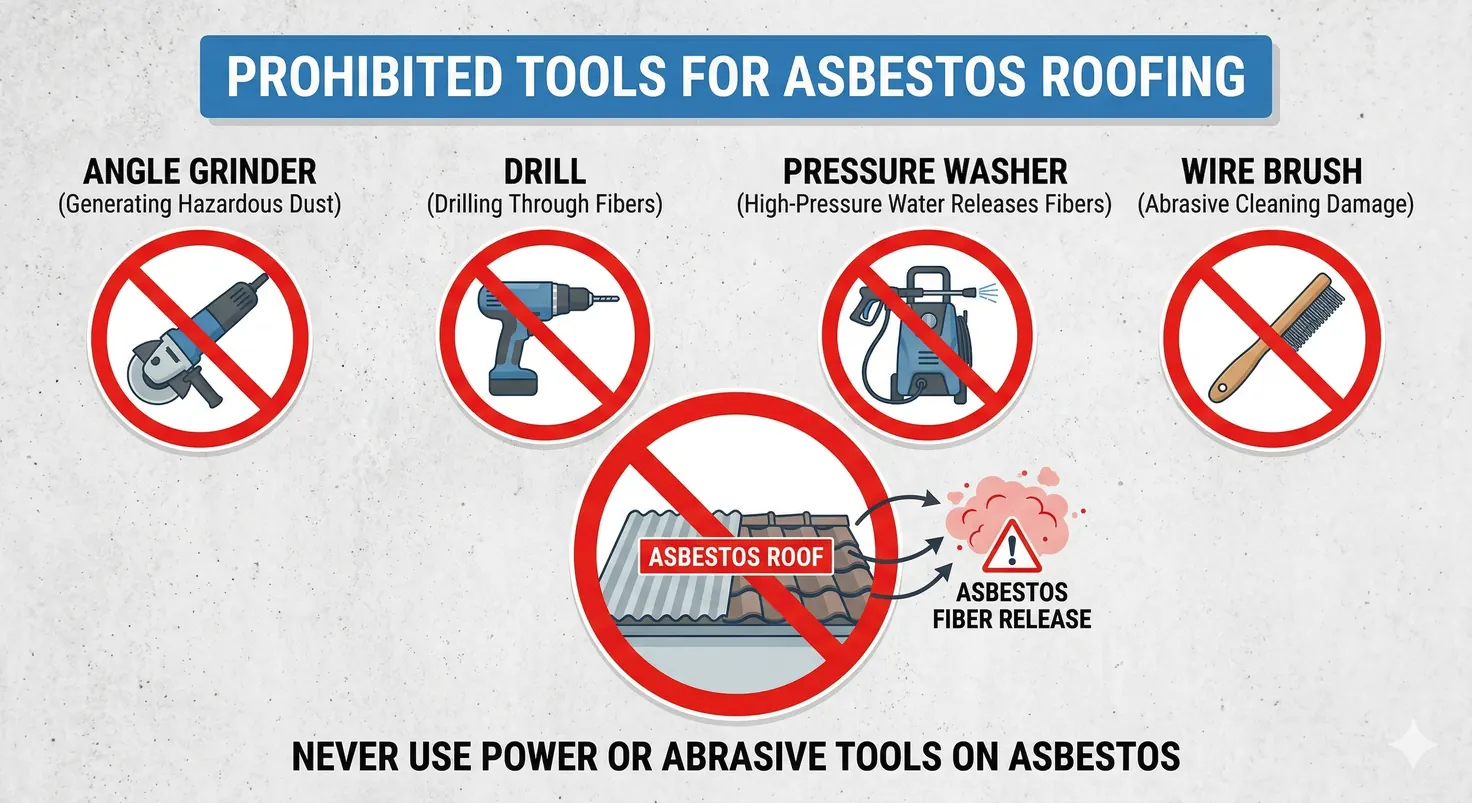
Under NSW Work Health and Safety legislation and the Code of Practice: How to Safely Remove Asbestos (Safe Work Australia), there are strict restrictions on what homeowners and unlicensed tradespeople can do with asbestos-containing materials.
Homeowners may not:
- Cut, drill, sand, grind, or mechanically disturb asbestos cement roofing in any way
- Pressure wash or high-pressure clean asbestos cement roofing — this fragments the surface and releases fibres
- Scrub, wire brush, or aggressively clean the surface
- Remove more than 10 square metres of non-friable asbestos without a licensed asbestos removalist — and in practice, roof removal almost always exceeds this threshold
- Dispose of asbestos waste in general household bins — asbestos waste must be disposed of at an approved facility in accordance with NSW EPA requirements
What a Specialist Asbestos Roof Inspection Covers
Assessing the condition of an asbestos cement roof requires a thorough inspection of the entire surface — but physically walking on asbestos cement roofing is not appropriate practice. Asbestos cement sheeting is brittle, particularly when aged, and foot traffic risks cracking and fracturing the sheets — potentially releasing fibres and certainly worsening the condition of the material.
We assess asbestos cement roofing without walking on it. Some areas may not be visible that way, and the report will say so. The inspection looks at:
- Surface condition — cracking, surface erosion, delamination, and edge deterioration that indicates the material is approaching or has reached friable condition.
- Sheet integrity — cracked, broken, or missing sections that represent both an immediate weather risk and a potential fibre release point.
- Ridge and hip capping condition — deterioration of asbestos cement cappings is often more advanced than the main roof sheets due to their greater exposure.
- Evidence of previous repairs — inappropriate repairs using incompatible materials or patches that indicate recurring issues.
- Guttering and drainage condition — debris accumulation against asbestos cement sheeting accelerates surface deterioration.
Following the inspection, a written report documents the condition of the asbestos cement roofing in plain English — with clear priority ratings and recommended next steps, including whether specialist asbestos assessment or licensed removal is required.
Your Options for an Asbestos Cement Roof in Western Sydney
Once you have a clear picture of your roof's condition, there are three realistic paths forward depending on what the inspection finds:
1. Monitor and Maintain — Intact, Good Condition
If the asbestos cement roofing is intact, well-bonded, and showing no signs of surface erosion, cracking, or delamination, the appropriate course of action may be ongoing monitoring. Painting or sealing intact asbestos cement roofing using appropriate encapsulant products applied by a licensed professional can extend the serviceable life of the material.
2. Encapsulation — Deteriorating but Not Critically Damaged
Where the surface shows moderate weathering and some erosion but the sheets remain structurally intact, encapsulation by a licensed asbestos professional using a penetrating sealant can stabilise the material and extend its life. This is a shorter-term solution and does not eliminate the eventual need for removal.
3. Licensed Removal and Replacement — Significantly Deteriorated or Damaged
Where the inspection finds significant cracking, fragmentation, or friable condition — or where the roof requires major repair work that cannot be conducted without disturbing the asbestos — licensed removal and replacement is the appropriate and legally required path.
Suburbs in Western Sydney With High Concentrations of Asbestos Roofing
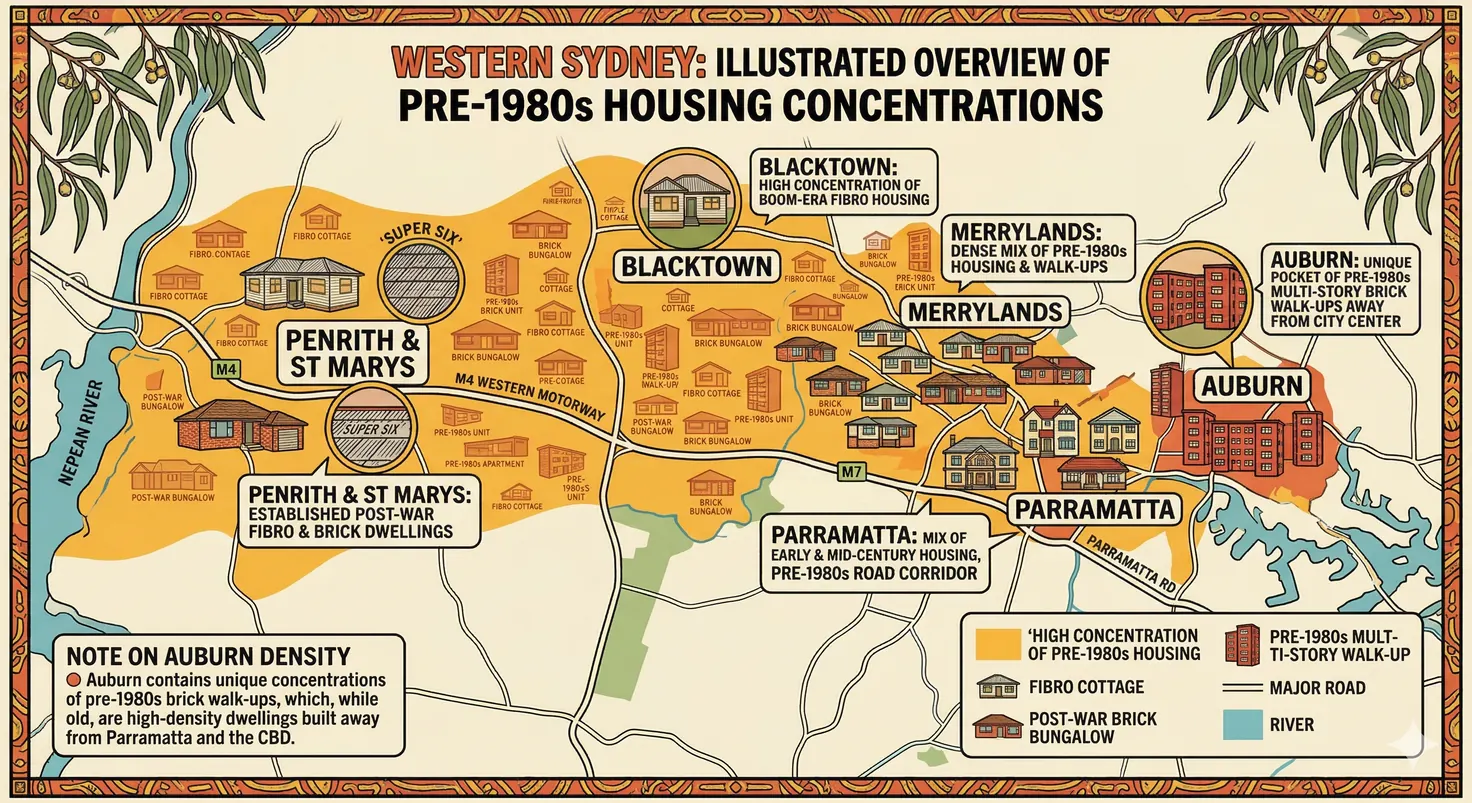
Blacktown LGA
Blacktown, Seven Hills, Marayong, Kings Langley, Doonside, Toongabbie
Cumberland LGA
Merrylands, Guildford, Auburn, Berala, Lidcombe, Granville, South Granville
Parramatta LGA
Parramatta, Wentworthville, Pendle Hill, Toongabbie, Old Toongabbie
Penrith LGA
Penrith, Kingswood, St Marys, Werrington, Colyton, Oxley Park
Hills District
Baulkham Hills, Castle Hill (older sections), North Rocks, Carlingford
Frequently Asked Questions — Asbestos Roofing Western Sydney
Can I paint over my fibro roof myself?
No. Applying paint or sealant to asbestos cement roofing should only be carried out by a licensed asbestos professional using appropriate encapsulant products and personal protective equipment. Do not attempt this as a DIY task.
Does asbestos roofing need to be disclosed when selling a property?
Under NSW property law, vendors are required to disclose known defects that would materially affect a buyer's decision. Known asbestos-containing materials should be disclosed. A pre-sale roof inspection report from Bingley provides documented evidence of the roof's condition that protects both vendor and buyer.
My roofer says he can fix a couple of broken fibro sheets — is that okay?
Only if the roofer holds the appropriate SafeWork NSW asbestos removal licence for the scope of work involved. Ask to see their licence before any work begins. An unlicensed tradesperson working on asbestos cement roofing — even for minor repairs — is operating illegally under NSW WHS legislation.
How much does it cost to remove and replace an asbestos cement roof in Western Sydney?
Costs vary significantly depending on roof area, pitch, access difficulty, and replacement material chosen. As a general guide, full licensed removal and Colorbond replacement on a standard single-storey Western Sydney home typically ranges from $15,000 to $35,000+. Getting an accurate condition assessment first ensures you're not spending that money prematurely.
Is asbestos roofing covered by home insurance?
Most standard building insurance policies exclude asbestos-related removal and remediation costs. However, damage caused to asbestos cement roofing by an insured event — such as a storm — may be assessed differently. Review your policy wording carefully and contact your insurer directly. A Bingley inspection report provides the written evidence needed to support any claim discussion.
Book an Asbestos Roof Assessment in Western Sydney
We assess asbestos cement roofing safely — without physical contact with the surface — and provide a clear written report on condition, risk, and recommended next steps. No alarmism, no unnecessary urgency, just an accurate picture of what you have and what to do about it.